
Written by webtechs

How To Help Desert Plants Handle July Heat And Monsoon Weather

How To Help Desert Plants Handle July Heat And Monsoon Weather

How To Help Desert Plants Handle July Heat And Monsoon Weather

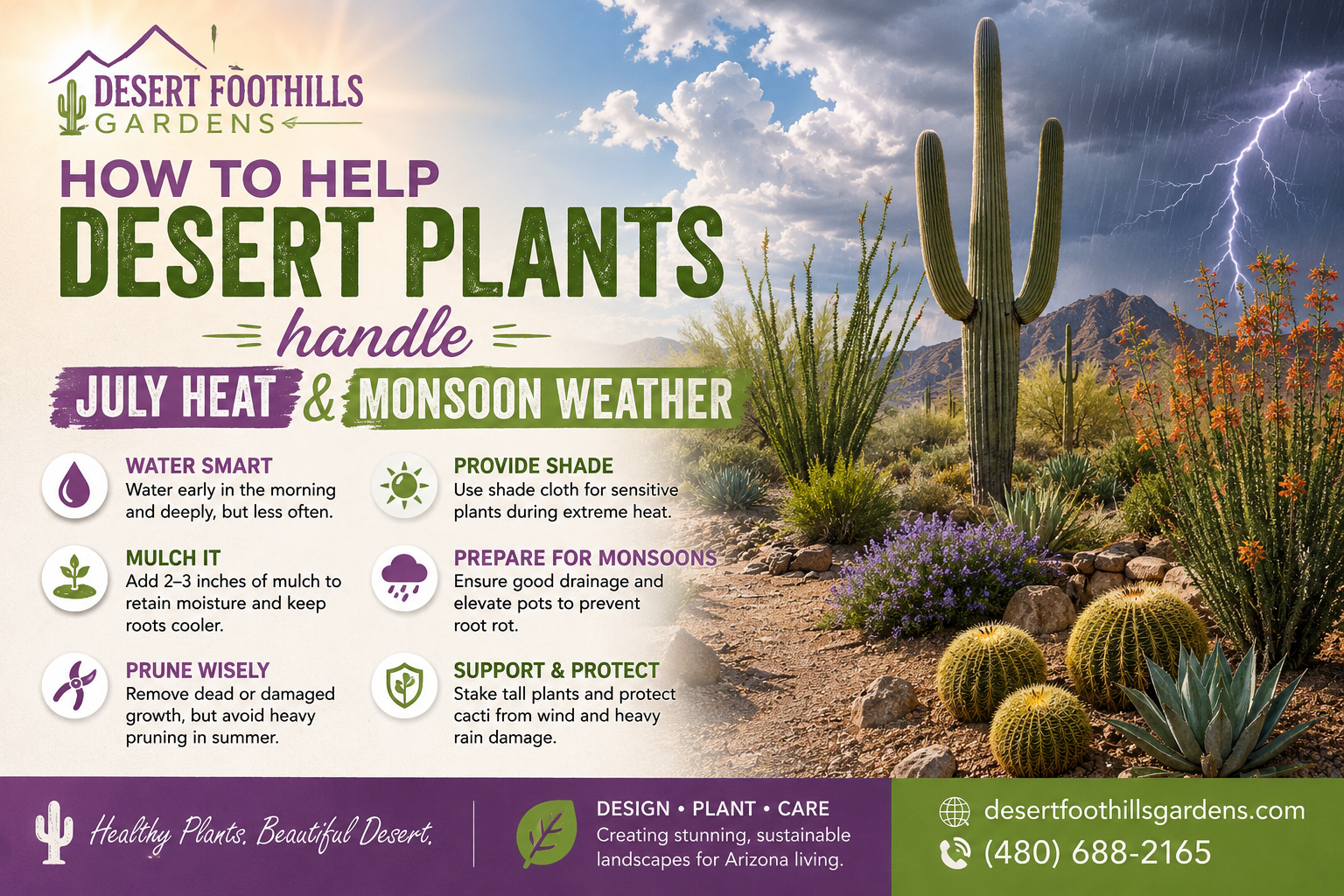
July in Arizona is a strange month for landscaping. One day the yard is baking in hard sun. The next day a monsoon storm can bring wind, dust, heavy rain, and debris. Even plants that belong in the desert can struggle if they are in the wrong place, watered the wrong way, or planted without enough thought.

That is why summer plant care is not just about adding more water. In many cases, it is about choosing the right plants, checking drainage, protecting roots, and letting the landscape work with the desert instead of fighting it.

Desert Foothills Gardens Nursery in Cave Creek offers native plants, drought tolerant plants, cactus, desert trees, pottery, fountains, sculptures, and landscape design help for Arizona homes and businesses.

Choose Plants That Belong In The Desert

The best summer landscape starts with plant selection. A plant that looks good in a photo may not be happy in Cave Creek, Phoenix, Scottsdale, Carefree, or Anthem once July heat arrives.

Native and drought tolerant plants are usually better suited for the Valley because they are built for sun, dry air, and lower water use. Desert Foothills Gardens carries many desert plants for sale, including cactus, succulents, desert trees, shrubs, and hot weather flowers.

The AMWUA Landscape Plants for the Arizona Desert guide is also a useful reminder that low water plants can still provide color, shade, texture, and seasonal interest when they are chosen carefully.

Do Not Overreact After A Hot Week

When plants look tired in July, many homeowners immediately add more water. Sometimes that helps. Sometimes it causes more problems.

Too much water can damage roots, especially if soil does not drain well. Cactus and succulents can suffer when water sits around the root zone. Trees and shrubs may also struggle if irrigation runs too often but does not reach deeply enough.

A better approach is to check the soil, look at the plant, and think about where the water is actually going. Desert landscaping does not mean no water. It means smart water.

Watch Drainage During Monsoon Storms

Monsoon rain can expose weak spots in a landscape. Water may rush toward the house, collect around plants, wash away gravel, or leave some areas soaked while others stay dry.

Before storms become frequent, walk the yard and look for low spots, erosion, blocked drains, and areas where water has nowhere to go. A good desert landscape should guide water through the property without drowning plants or damaging hardscape.

Boulders, gravel, proper grading, plant placement, and irrigation planning can all make a difference.

Add Shade, Texture And Garden Features

A desert yard does not have to look bare. Cactus, desert trees, pottery, fountains, sculptures, benches, and garden accents can give the space more personality while still keeping it practical for Arizona.

Desert Foothills Gardens helps customers balance color, form, plants, sculptures, and water features for small gardens and larger estate landscapes.

Visit Desert Foothills Gardens Nursery

Desert Foothills Gardens Nursery has served Arizona since 1985 with desert plants, cactus, trees, pottery, water fountains, garden decor, and landscape design help.

Visit Desert Foothills Gardens at 33840 N. Cave Creek Rd. in Cave Creek, Arizona, or call 480 488 9455 to schedule a visit to your home.

Summer Desert Landscaping in Phoenix

Desert Foothills Gardens Nursery, Inc. has been Phoenix’s source for design, plan selection, and maintenance since 1985. We have a team of experts that help with the overall plan for your desert landscape that includes plant selection, design, irrigation, and water management strategies. If you are interested in seeing how Desert Foothills Gardens Nursery, Inc. could provide a low maintenance and low water use landscape at your home or business either stop our nursery at 33840 N. Cave Creek Rd. in Cave Creek or give us a call at 480-488-9455.


Written by webtechs

Summer Garden Care In Arizona For Desert Plants And Landscapes

June is when an Arizona garden starts to show what is really working.

Some plants handle the heat without much complaint. Others begin to wilt, fade, burn, or look tired by the middle of the afternoon. Even plants that are considered desert friendly can struggle if they were planted too recently, watered poorly, or placed in the wrong part of the yard.

That is why summer garden care in Arizona needs a slightly different mindset. The goal is not to force a lush green garden to behave like it would in a cooler climate. The goal is to work with the desert, choose the right plants, and help the landscape stay healthy through the hottest part of the year.

Desert Foothills Gardens can help homeowners think through plants, watering, seasonal care, and desert landscape choices that make sense for Arizona conditions.

Water Deeply Instead Of Constantly

One of the most common summer garden mistakes is shallow watering. A quick sprinkle may make the surface look damp, but it does not always reach the root zone where plants need moisture most.

Deep watering is usually better for many trees, shrubs, and desert plants. It encourages roots to grow deeper, where the soil stays cooler and moisture lasts longer. The exact watering schedule depends on the plant, soil, sun exposure, slope, and age of the landscape.

New plants need closer attention than established plants. Even a heat tolerant plant may need extra care during its first summer while roots are still developing.

Watch For Heat Stress

Plants do not always fail suddenly. They usually give warnings first.

Curling leaves, crispy edges, dull color, dropped flowers, yellowing leaves, limp stems, and scorched tips can all be signs that a plant is under stress. Sometimes the issue is not enough water. Other times it may be too much water, poor drainage, reflected heat from walls, or a plant that is simply in the wrong location.

In June, it is smart to walk the yard early in the morning and look closely. Morning is better because some plants naturally look tired in late afternoon heat, then recover overnight.

Use Mulch To Protect Soil

Mulch can make a real difference in Arizona gardens. It helps slow evaporation, protects soil from direct sun, moderates soil temperature, and can reduce weed growth.

Organic mulch works well around many trees, shrubs, and planting beds. Rock can also be useful in desert landscapes, but it can hold and reflect heat. Around sensitive plants, too much rock in full sun may make the root area hotter than expected.

The right choice depends on the plant and the design of the yard.

Choose Plants That Belong In The Desert

A summer garden is easier to maintain when the plant palette fits the climate. Desert adapted trees, shrubs, succulents, cacti, perennials, and groundcovers can provide color, structure, texture, and seasonal interest without fighting the environment every week.

That does not mean the garden has to look plain. Arizona landscapes can be full of color and personality when plants are chosen for the right space.

Before planting in June, homeowners should think carefully about exposure, irrigation, mature size, reflected heat, and how much care the plant will need through summer.

Contact Desert Foothills Gardens

If your Arizona garden is struggling in the heat, or if you are planning a more desert friendly landscape, Desert Foothills Gardens can help with plant selection and seasonal garden guidance.

June is a good time to make smart adjustments before the worst summer stress arrives. With the right watering habits, plant choices, mulch, and care, a desert garden can stay attractive and healthy through the heat.

Call Desert Foothills Gardens today to learn more about Arizona summer garden care and desert landscape plants.

References:

https://desertfoothillsgardens.com/

https://extension.arizona.edu/sites/extension.arizona.edu/files/pubs/az1298.pdf

https://extension.arizona.edu/sites/extension.arizona.edu/files/pubs/az1150.pdf

https://www.amwua.org/landscape/watering-guide

https://www.amwua.org/plants

Summer Desert Landscaping in Phoenix

Desert Foothills Gardens Nursery, Inc. has been Phoenix’s source for design, plan selection, and maintenance since 1985. We have a team of experts that help with the overall plan for your desert landscape that includes plant selection, design, irrigation, and water management strategies. If you are interested in seeing how Desert Foothills Gardens Nursery, Inc. could provide a low maintenance and low water use landscape at your home or business either stop our nursery at 33840 N. Cave Creek Rd. in Cave Creek or give us a call at 480-488-9455.


Xeriscaping 101
Written by webtechs

Xeriscaping 101

Xeriscaping is often misunderstood. Some people hear the word and picture a front yard full of gravel, one lonely cactus, and a few sunbaked rocks. That can be xeriscaping, technically, but it is not the whole story. A good xeriscape can be colorful, soft, shaded, wildlife friendly, and genuinely beautiful.

At its heart, xeriscaping is landscaping designed to use less water. In Arizona and other dry climates, that just makes sense. Water is precious, summers are long, and a traditional thirsty lawn can become expensive and difficult to justify.

Xeriscaping is not about giving up on your yard. It is about making the yard fit the place where you live.

Start With A Smart Plan

The best xeriscapes begin with planning, not plants. Look at where the sun hits hardest, where water runs after rain, where shade already exists, and which areas you actually use.

A front yard may need curb appeal. A backyard may need space for seating, dogs, children, raised beds, or a quiet morning coffee spot. Once you understand how the space works, it becomes easier to design a landscape that saves water without feeling bare.

Grouping plants by water needs is another smart move. Thirstier plants, if you use them, should be placed together. Low water plants should have their own zones. That keeps irrigation efficient and prevents overwatering plants that would rather stay dry.

Choose Desert Friendly Plants

Native and desert adapted plants are the stars of xeriscaping. They are built for heat, dry soil, and long sunny days. Options can include desert marigold, red yucca, agave, penstemon, salvia, fairy duster, brittlebush, desert spoon, and many types of cactus.

Trees matter too. A well placed desert tree can cool a patio, shade windows, and make the yard much more comfortable. Palo verde, mesquite, and desert willow are all popular choices when planted in the right location.

The trick is to choose plants for mature size, not just how cute they look in a nursery pot. Arizona plants can surprise you.

Use Mulch, Rock, And Soil Wisely

Rock is common in desert landscapes, but too much bare rock can make a yard hotter. Mixing gravel with plants, mulch, boulders, pathways, and shaded areas creates a more comfortable space.

Organic mulch can help around certain plants by cooling the soil and slowing evaporation. In more desert style areas, decomposed granite or gravel may be the better fit. Either way, the goal is to protect the soil and reduce wasted water.

Irrigation Still Matters

Xeriscaping does not mean no watering at all. New plants need regular water while they establish. After that, many desert adapted plants need much less.

Drip irrigation is usually the best choice because it delivers water close to the roots. Timers, seasonal adjustments, and occasional checks for leaks can make a big difference. A broken drip line can waste water quietly for weeks.

Call Desert Foothills Gardens

A beautiful xeriscape should feel natural, practical, and personal to your home. Desert Foothills Gardens can help you design and maintain a low water landscape that fits Arizona living without feeling plain or lifeless. Contact Desert Foothills Gardens today to start planning a smarter desert garden.

References

Desert Foothills Gardens, Landscaping Services

Arizona Municipal Water Users Association, Xeriscape Landscaping

University Of Arizona Cooperative Extension, Water Wise Landscaping

Water Use It Wisely, Xeriscape Principles

Arizona Department Of Water Resources, Conservation

Phoenix Valley Xeriscape Design & Installation

Desert Foothills Gardens, Inc. has a team of award winning landscape design specialists that are professionals in Xeriscape landscaping.  We will help you design a visually impressive, low maintenance, low water use Xeriscape that will bring unmistakable beauty to your residential or commercial property. If you have any questions or are looking to get started please stop by or give us a call today.

Call Us Today At – (480) 488-9455

Saguaro Cactus Costs 2026
Written by webtechs

Saguaro Cactus Costs 2026

If you are thinking about adding a saguaro cactus to your Arizona landscape in 2026, the first thing to know is that prices can vary more than many people expect. A tiny nursery-grown saguaro is one thing. A mature specimen that needs delivery, planting, and the proper paperwork is something else entirely.

For smaller saguaros, pricing is usually pretty approachable. A 6 inch saguaro often costs around $20, a 12 inch plant may be about $40, an 18 inch one can run roughly $75, and a 24 inch saguaro is often around $150. Once you move into larger plants, pricing usually shifts to a per-foot basis. In many Arizona nurseries, 3 foot to 7 foot saguaros often run about $80 per foot, while 8 foot to 20 foot saguaros can cost around $100 per foot.

WHY THE PRICE GOES UP SO FAST

The biggest reason is simple. A larger saguaro is not just a bigger plant. It is also a more specialized purchase. Taller saguaros are heavier, harder to move, and more expensive to transport and install safely. That means you are not only paying for the cactus itself. You are also paying for the labor, equipment, and care needed to handle it properly.

A medium sized or large saguaro can also become a real focal point in a landscape, which naturally adds to its value. For homeowners who want that classic Arizona look, a mature saguaro can make a huge visual impact, but it comes with a bigger investment.

EXTRA COSTS MANY PEOPLE FORGET ABOUT

The cactus price is only part of the total. In 2026, delivery and planting often add another $100 to $500 or more, depending on the size of the saguaro and how far it needs to travel. If the planting area is tricky to access, or if special equipment is needed, the cost can go higher.

There may also be permit or movement related costs in the $10 to $50 range in some situations. Arizona takes saguaros seriously, and for good reason. These are protected native plants, and moving certain saguaros legally can involve tags, seals, permits, or proof of prior legal movement. That is one reason it is smart to buy from a reputable nursery that understands the rules.

WHAT MANY HOMEOWNERS ACTUALLY SPEND

For a small decorative saguaro, you may only spend a few dozen to a couple hundred dollars. For a medium specimen with delivery and planting, the total may move into the few hundred to low thousand dollar range. For a large, statement-making saguaro, especially one well above 8 feet tall, the final number can climb much higher.

That is why there is never one simple “average” price. It really depends on the size you want and how complete the service package is.

IS A SAGUARO WORTH THE COST

For many Arizona homeowners, absolutely. A saguaro is more than just another plant. It brings a true Sonoran Desert feel to a yard and gives the landscape a look that feels timeless, local, and unmistakably Southwestern.

If you are thinking about adding a saguaro cactus to your property, Desert Foothills Gardens can help you choose the right size, explain the real costs, and handle the process the right way. Reach out today to find the right saguaro for your space and bring a genuine Arizona icon into your landscape.

REFERENCES

Desert Foothills Gardens, Saguaro Cactus For Sale Phoenix AZ

Desert Foothills Gardens, Saguaro Cactus Costs 2025

Arizona Legislature, Collection and Salvage of Protected Plants

Arizona Department of Agriculture, Native Plants

Desert Plants For Sale

If you are interested in increasing the beauty of your landscape by buying desert plants, stop by our convenient location at 33840 N. Cave Creek Rd., in Cave Creek. For customers interested in our landscaping services, give us a call at (480) 488-9455 to schedule a visit to your home.

More Articles About Arizona Landscaping

Xeriscaping Costs Arizona 2026
Written by webtechs

Xeriscaping Costs Arizona 2026

If you are thinking about xeriscaping your Arizona property this year, one of the first questions is usually about cost. The good news is that xeriscaping can often reduce water use, cut back on maintenance, and create a yard that makes much more sense for the desert. The part that varies is the upfront price.

In Arizona, xeriscaping typically ran between $5 and $20 per square foot in 2026. The final price tag hinged on several factors: the yard’s dimensions, the materials selected, and the complexity of the design. For many homeowners, a basic landscaping project could easily start in the $3,000 to $10,000 range. But if you’re looking at something bigger or more tailored to your tastes, the price tag could easily climb to $15,000, $25,000, or even higher.

What Affects Xeriscaping Costs

The biggest cost factor is the design itself. A simple xeriscape that uses gravel, mulch, a few desert plants, and basic drip irrigation will usually be more affordable than a full custom landscape with boulders, decorative pathways, specimen cacti, lighting, and larger trees.

Plant selection matters too. Native and drought tolerant plants are a smart long term choice for Arizona, but mature plants and larger specimen pieces cost more upfront than smaller nursery stock. The same goes for hardscape materials. Basic decomposed granite or gravel is generally more budget friendly than premium stone, pavers, or custom masonry.

Labor also plays a big role in the total project cost. Removing grass, reshaping the yard, installing irrigation, and hauling in materials all add to the final number. If your property has difficult access, a slope, or old landscaping that needs to be removed first, the price can climb from there.

Why Xeriscaping Makes Sense In Arizona

Arizona homeowners are not just choosing xeriscaping because it looks attractive. It’s also a practical choice, given the climate. Maintaining a conventional lawn in a hot, arid place can be costly, particularly when you factor in the expense of water and ongoing maintenance.

A xeriscape design can help reduce watering needs while still giving you color, texture, and visual interest. With the right layout, you can have flowering plants, shade trees, sculptural succulents, and pathways that feel intentional rather than sparse. In other words, xeriscaping does not mean giving up beauty. It means designing with the desert instead of fighting it.

Budgeting For The Full Project

One common mistake is focusing only on the square foot price without thinking about the whole job. The total cost may include design work, demolition, soil prep, irrigation updates, rock or mulch installation, plant placement, and finishing details.

Several cities and water suppliers in Arizona provide landscape rebate programs. These are often linked to removing grass and switching to low-water-use landscaping. Depending on your location and the specifics of your project, these programs can help cover some of the expenses.

A Long Term Investment In Your Property

For many Arizona homeowners, xeriscaping is not just about lowering water use. It is also about creating an outdoor space that looks polished, belongs in the local environment, and requires less ongoing work than a traditional lawn heavy yard.

If you are ready to create a landscape that fits Arizona beautifully, contact Desert Foothills Gardens today to discuss your xeriscape ideas and request a custom quote for your property.

References

https://desertfoothillsgardens.com/

https://desertfoothillsgardens.com/what-is-xeriscaping/

https://desertfoothillsgardens.com/xeriscaping-costs-2025/

https://www.angi.com/articles/xeriscaping-cost.htm

https://www.apnursery.com/xeriscape-costs-in-arizona-in-2026/

https://www.chandleraz.gov/residents/water/water-conservation/rebate-and-incentive-programs/large-water-use/rebate-policy

More Articles About Xeriscaping

2026 Arizona Landscape Boulders Costs
Written by webtechs

2026 Arizona Landscape Boulders Costs

Adding structure and charm to an Arizona yard with landscape boulders is one of the best things you can do. Boulders seem natural and ageless, which makes them a great choice for the Southwest. They may be utilized to anchor a desert landscape design, provide natural boundaries, or give visual interest to a slope.

If you’re thinking of adding boulders to your yard in 2026, it helps to know how much they usually cost and what aspects determine the final price.

Average Cost of Landscape Boulders in Arizona

Most landscaping boulders in Arizona will cost either by the ton or by the piece in 2026. Depending on their size, color, and kind of stone, smaller ornamental boulders can cost between $80 and $200 each, while bigger statement boulders can cost between $250 and $800 or more.

When you buy a lot of something, you usually get a better price per ton. The cost of materials is normally between $150 and $350 per ton, but the entire cost of a project usually includes delivery and placement, which can make a big difference in the final price.

Costs for Delivery and Placement

Transportation and placement are two of the most important things that affect how much it costs to install landscaping boulders. Boulders are heavy, therefore you need special tools like cranes or loaders to move them.

Delivery prices frequently depend on:

How far away the supplier is

How big and heavy the boulders are

How easy it is to get to the property

Placement is also important. It takes forethought and skill to place a rock in the terrain such that it seems natural. Putting the boulder in the right spot makes sure it is stable and fits in with the overall design better.

Why Boulders Are So Common in Arizona Landscapes

Boulders are great for arid environments since they don’t need much care. You don’t have to water, trim, or replace them as you do with plants or grass.

They also help make things appear natural, which goes well with native plants, gravel, and arid soils. Many people use rocks to mark off outdoor spaces, frame paths, or make huge open areas look more balanced.

Over time, landscape boulders may also make a yard look more completed and professionally planned, which can make it more appealing to buyers.

Planning Your Boulder Project

It’s a good idea to think about how your yard will look as a whole before picking out stones. Think of where the main points should be, how the paths or planting areas will flow, and how the boulders will work with the other things that are already there.

Landscaping Boulders In Arizona

If you are interested in increasing the beauty of your landscape by buying desert rocks, stop by our convenient location at 33840 N. Cave Creek Rd., in Cave Creek, give us a call at (480) 488-9455 to schedule a visit to your home.

Written by webtechs

Top Xeriscaping Ideas 2026

Top Xeriscaping Ideas 2026

Xeriscaping is becoming more and more popular as water conservation becomes increasingly essential in Arizona. Xeriscape design isn’t just about bare gravel and few plants anymore in 2026.

Here are some of the best xeriscaping ideas that homeowners are using in 2026 if you’re thinking about changing up your yard this year.

1. Layered Desert Plant Design

Layered planting is one of the most popular new concepts in xeriscaping. Instead of putting plants all over the place, designers utilize a combination of trees, shrubs, accent plants, and ground cover to make the space look deeper and more interesting. Palo verde, desert willow, and mesquite give light shade, and agave, red yucca, and native grasses fill in the bottom strata.

2. Decorative Rock and Gravel Zones

Gravel is still a common material for xeriscaping, but in 2026 it will be used in more inventive ways. Colors and textures that are different from each other help break up big areas and make them look better from the street.

To keep everything looking clean and easy to care for, it’s important to install the weed barrier and edging correctly.

3. Smart Watering and Drip Irrigation

For xeriscaping to work, you need to be able to water your plants well. Drip irrigation systems send water straight to the roots of plants, which cuts down on evaporation and waste. Many houses are using smart controllers with drip systems in 2026.

4. Native and Pollinator-Friendly Plants

Native plants are still the most popular choice for xeriscaping. Plants that are native to Arizona need less water, are easier to care for, and can handle harsh temperatures better. Many people who own homes are also adding plants that are good for pollinators, such as desert marigold, penstemon, and fairy duster, to help bees, butterflies, and birds.

5. Functional Outdoor Living Spaces

Plants aren’t the only thing that xeriscaping is about. More homeowners are building patios, lounging areas, and stone paths that fit in well with the landscape in 2026. Using natural materials like flagstone and pavers makes outdoor spaces functional without using more water.

Let’s Get Rocking!

Desert Foothills Gardens will help you make your yard look better with a beautiful, water-wise landscape. Call Desert Foothills Gardens right away to set up a consultation and start constructing a beautiful, low-water landscape that you’ll love for years to come.

Keywords: xeriscaping ideas 2026, Arizona xeriscape landscaping, desert landscaping design, low water landscape ideas, xeriscape garden installation

Desert Plants For Sale

If you are interested in increasing the beauty of your landscape by buying desert plants, stop by our convenient location at 33840 N. Cave Creek Rd., in Cave Creek. For customers interested in our landscaping services, give us a call at (480) 488-9455 to schedule a visit to your home.

More Articles About Arizona Landscaping

Written by webtechs

What Is Xeriscaping?

Xeriscaping is one of the most popular ways to landscape in the Southwest, and it’s easy to see why. As water bills go up, dry seasons get longer, and desert flora are so beautiful, more and more people are choosing landscapes that are both beautiful and good for the environment. But what is xeriscaping, really?

What Is Xeriscaping?

What Is Xeriscaping?

Xeriscaping is a way of landscaping that cuts down on or gets rid of the requirement for extra watering. Read on to learn more.

The Main Ideas Behind Xeriscaping

1. Saving water

Using water properly is the most important part of xeriscaping. This involves picking plants that don’t need a lot of water to live and making sure that every drop of water is used well in the landscape.

2. Making the soil better

Plants that can survive without water grow better in healthy soil. Compost and mulch are examples of amendments that help plants stay healthy and hold onto moisture better.

3. Carefully choosing plants

Xeriscaping is all about plants that are native to the area and can live in the desert, like:

  • Agave
  • Yucca
  • Marigold in the desert
  • Red yucca
  • Palo verde

Different types of sage

These plants do well in Arizona’s environment, so they don’t need much water or care.

4. Watering that works well

Drip irrigation systems are really crucial for xeriscaping because water is sent straight to the roots of plants. You can automate a lot of things to make sure plants get the proper amount of water.

5. Using mulch to keep moisture in

Gravel, decomposed granite, or organic mulch keeps the soil cool, stops weeds from growing, and cuts down on evaporation. Mulch also makes xeriscape designs look clean and natural.

6. Smaller areas of grass

You need to water and care for grass lawns a lot. Xeriscaping replaces most (or all) of the grass with beautiful rock, hardy groundcovers, or desert plants. This cuts down on the amount of water needed by a lot.

Why Xeriscaping Is Perfect for Arizona

1. Water bills become Lower

Water rates are going up, but xeriscaping can save you a lot of money on your monthly watering expenditures.

2. Less work to do

No excessive watering, fertilizing, or mowing every week. Desert landscapes are easier to take care of and look fantastic all year.

3. Good for the environment

Xeriscaping helps the environment by reducing water waste and making homes for birds, pollinators, and other desert animals.

Last Thoughts

With xeriscaping , homeowners may have a beautiful landscape all year long that uses a lot less water if they hire a professional to design it and choose the right plants.

Phoenix Valley Xeriscape Design & Installation

Desert Foothills Gardens, Inc. has a team of award winning landscape design specialists who are experts in Xeriscape landscaping.  We will help you design a visually impressive, low maintenance, low water use Xeriscape that will bring unmistakable beauty to your residential or commercial property. If you have any questions or are looking to get started please stop by or give us a call today.

Call Us Today At – (480) 488-9455

Written by webtechs

Garden Soil Vs. Potting Mix | Differences

The quality of your garden soil will decide how well you can grow fresh tomatoes, peppers, herbs, and leafy greens right in your own backyard in the Phoenix Valley. But here’s the key question that a lot of desert gardeners have: Is “garden soil” in a bag really helpful for producing veggies in our hot, alkaline climate? Yes, but there are some key things to keep in mind.

Understanding the Soil Conditions in Phoenix

Most of the Valley’s native soils are alkaline, sandy-loam to clay-loam, and don’t have a lot of organic matter. This implies that when they are dry, they drain fast, and when they are watered, they become compact. They also don’t keep nutrients long enough for plants that need a lot of them.

Because of this, many gardeners think that bagged garden soil is the easiest way to remedy the problem. And even though it helps, it’s not the whole answer by itself.

What Garden Soil Is and Isn’t

Most commercial garden soil mixes have compost, bark fines, peat or coconut coir, and minor amounts of fertilizer in them. These things help the structure and supply organic matter that desert soils really need.

But garden soil is normally made to be blended with native soil, not utilized on its own. By itself, it can get too hot, not drain well, or get too compacted. This is especially true in raised beds during Phoenix’s hot summers.

How to Use Garden Soil Well in the Valley

Instead of thinking of garden soil as the main event, think of it as an amendment to help your veggies grow.

1. Add 2 to 4 inches of garden soil to your natural soil.
This makes the texture better, helps it hold moisture, and helps it take up nutrients. Dig deep—roots of vegetables need space to grow.

2. For even greater results, mix with compost.
Adding compost to Phoenix soils on a regular basis helps them grow. A mixture of half garden soil and half compost makes a blend that is richer and easier to work with.

3. Don’t forget to use mulch
A thick coating of wood chips, shredded bark, or straw helps keep the soil at the right temperature, which is important when summer temperatures can reach 110°F.

4. Use raised beds the appropriate way
If you like raised beds, don’t just fill them with garden soil. Use a mix of instead:

  • Half of the compost
  • 25% dirt from the garden
  • 25% native soil or topsoil that has been screened

This makes sure that nutrients, air, and water circulate evenly.

5. Check and change the pH of the soil
The soil in Phoenix is usually alkaline. Tomatoes, leafy greens, and herbs are some of the veggies that do best in slightly acidic soil. Over time, adding compost and sulfur to the soil can help keep the pH level stable.

The Bottom Line

Garden soil is good for growing veggies in the Phoenix Valley, but it’s not enough on its own. When you mix it with compost, native soil, mulch, and careful watering, it may make a big difference in how healthy and productive your garden is. Think of it as a part of a system. It’s an important part, but it’s not the only one.

Your desert vegetable garden can do well all year long if you mix the right things and prepare them correctly.

Phoenix Valley Nursery & Gardening Center

If you are looking for wide selection of soils or potting mix along with healthy plants to buy from a nursery Desert Foothill Gardens is the place for expert advice, the best plants, and landscaping design.  Stop by to talk about what you want to grow and we will help you find the right soil and the right location to plant your new plants.

Why Cantera Fountains Are a Hit With Upmarket Houses in Phoenix, Arizona
Written by webtechs

Why Cantera Fountains Are a Hit With Upmarket Houses in Phoenix, Arizona

Drive through Phoenix’s most exclusive neighborhoods, from Paradise Valley to Arcadia, and you’ll notice a design element that sets luxury homes apart: cantera stone fountains. These elegant water features, carved from volcanic rock, have become a hallmark of upscale living in the Valley of the Sun. But why are cantera fountains such a hit with high-end properties in Phoenix, Arizona? Let’s take a closer look.

What Is Cantera Stone?

Cantera stone is a natural volcanic rock quarried primarily in Mexico and Central America. The word cantera means “quarry” in Spanish, and this stone has been used for centuries in historic buildings, churches, and haciendas throughout Latin America. Its appeal lies in:

  • A porous, carvable texture that allows intricate design work

  • A wide range of natural hues—soft grays, rose, terracotta, tans, and creams

  • Exceptional durability in hot, dry climates like Arizona’s

  • A unique, handcrafted look, no two pieces are ever alike

According to Stone World Magazine, cantera is valued for its combination of beauty and functionality, making it a perfect fit for luxury landscaping.

Elegance That Elevates a Property

For homeowners in Phoenix’s upmarket neighborhoods, luxury isn’t only about size—it’s about atmosphere. A cantera fountain creates a sense of arrival the moment guests enter the property. The sound of cascading water softens the desert heat and adds serenity to an otherwise arid environment.

Design experts note that water features enhance curb appeal and increase perceived value of a property (National Association of Realtors). For upscale buyers, a hand-carved cantera fountain isn’t just décor, it’s an investment in ambiance.

Built for the Arizona Climate

Phoenix summers are brutal on many building materials. Some plastics and metals fade, warp, or crack under constant UV exposure. Cantera stone, however, is remarkably resilient. It weathers gracefully, resists heat damage, and doesn’t lose its natural color in the sun.

This durability makes cantera an ideal choice for outdoor fountains, which are constantly exposed to the elements. As Arizona Living Magazine points out, homeowners are increasingly turning to natural stone elements that stand the test of time in desert climates.

Custom Beauty and Artistic Versatility

One of cantera’s greatest advantages is its ability to be carved into intricate shapes. Artisans can create fountains with tiered bowls, sculpted animal motifs, floral patterns, or sleek modern lines. Each fountain can be customized to reflect the homeowner’s style and to complement the home’s architecture, whether Spanish Colonial, Southwestern, or contemporary desert modern.

Because no two cantera blocks are identical, every fountain is a one-of-a-kind work of art. This uniqueness resonates with luxury homeowners who want distinctive features that set their property apart.

Cultural Connection and Regional Authenticity

Phoenix’s cultural landscape is deeply tied to Mexican and Southwestern influences. By incorporating cantera stone, which has been a staple of Mexican architecture for centuries, homeowners create a sense of authenticity and heritage. It’s a way of honoring the region’s roots while enjoying a piece of timeless design.

As Houzz notes, natural stone fountains also bring a sense of grounding and history to modern spaces, making them especially meaningful in culturally rich areas like Arizona.

Popular Placement in Phoenix Luxury Homes

Where do homeowners place cantera fountains? The most popular spots include:

  • Front courtyards – A dramatic first impression for visitors.

  • Backyard patios – A focal point for outdoor entertaining.

  • Private gardens – A soothing retreat for reflection.

  • Indoor atriums or foyers – Adding elegance and tranquility inside the home.

These placements not only elevate aesthetics but also create a cooling, relaxing effect—something especially prized in Phoenix’s hot desert climate.

Final Thoughts

In Phoenix’s luxury housing market, details make the difference. Cantera fountains offer timeless elegance, resilience in the desert climate, cultural authenticity, and fully customizable artistry. That’s why they’ve become such a defining feature of upmarket homes across the Valley.

At Desert Foothills Gardens, we’ve seen firsthand how a cantera fountain can transform a property, turning outdoor spaces into serene sanctuaries. For homeowners who want both beauty and substance, cantera remains the ultimate choice.

Phoenix Valley Landscape Consultants

Desert Foothills Gardens Nursery, Inc. offers expert planning and installation of new landscapes for Phoenix valley residents. From Cave Creek to Mesa and anywhere in between we help our friends in Arizona design the most relaxing and beautiful outdoor spaces. Ensure that you consult one of our landscaping professionals for advice with getting the perfect look for your garden. Call Desert Foothills Gardens Nursery, Inc. at 480-488-9455 for more information on our fountains.

1 2 3 7