
Javelina Resistant Landscaping for Arizona Homes
How to Make a Cave Creek Yard Less Attractive to Javelina
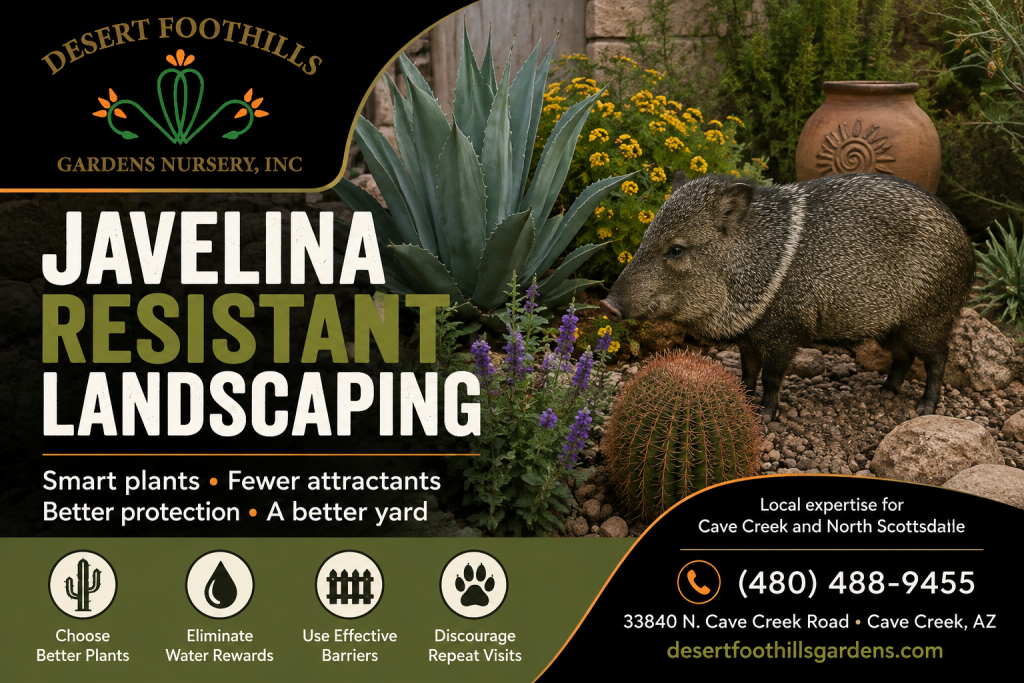
A javelina passing through a Cave Creek yard is not unusual. The trouble begins when the same herd finds an easy meal, a dripping irrigation line or a sheltered corner and decides to return. Homeowners often search for javelina resistant landscaping as though one plant list will solve the problem. It will not. A better plan combines sensible plant choices with fewer attractants, protected irrigation and barriers around the parts of the garden that matter most.
Why Javelina Visit Desert Homes
Javelina are common around the outskirts of the Phoenix area and often travel through washes or dense vegetation. They eat mainly plant material, including cactus, succulents, bulbs, seeds and tender new growth. They may also be drawn to birdseed, fallen fruit, rubbish, pet food and accessible water.
That means a damaged flower bed does not always prove that the flowers caused the first visit. A leaking emitter, food left outdoors or a gap beneath a gate may have made the property worth investigating. Before replacing plants, walk the yard early in the morning and look for tracks, disturbed soil, damaged irrigation tubing and obvious entry points.
Remove Food and Water Rewards First
Start with the easy rewards. Feed pets indoors, sweep up spilled birdseed and collect fallen fruit or nuts promptly. Keep compost and rubbish containers closed. Check irrigation after dark or before sunrise, when a slow leak is easier to spot. Exposed drip tubing should be secured and inspected regularly because javelina may chew it while seeking water.
Pools, low water bowls and consistently damp soil can also encourage repeat visits. This does not mean turning a healthy landscape into bare gravel. It means avoiding accidental feeding stations and making sure irrigation reaches plants without leaving puddles beside paths, walls or gates.
Choose Plants With Realistic Expectations
No plant is completely javelina proof. The University of Arizona list describes certain plants as less likely to be eaten, not guaranteed protection. Rosemary, sage, marigolds, vinca, zinnia, juniper, shrub live oak and several other choices appear on that list. Availability, exposure, mature size and water needs still have to suit the individual site.
Newly installed plants are especially vulnerable because tender growth and freshly disturbed soil invite investigation. Protect valuable young specimens until they are established. A mixed planting usually makes more sense than filling an exposed bed with one soft, appealing plant. Around an entrance or patio, large pottery can also place seasonal colour above easy browsing height, although a heavy container should be chosen so it cannot be tipped readily.
Protect Important Areas With Barriers
Exclusion remains the most dependable protection. Some properties need a secure perimeter, while others only require a barrier around a vegetable bed, newly planted courtyard or favourite collection of succulents. Check gates for gaps and inspect the base of fences where animals could push underneath.
The Arizona Game and Fish Department advises that block walls or chain link fencing around four feet tall can deny access when properly maintained. Local rules should be checked before installing electric fencing. Good design matters here. A barrier can be softened with shrubs, pottery, boulders or a change in grade so the garden still feels welcoming rather than fortified.
Plan the Yard as a Complete System
The most effective javelina resistant landscaping in Arizona is rarely based on a single miracle plant. It considers where animals enter, what rewards them, which areas need protection and how people and pets use the space. It also accepts that a home beside open desert will sometimes have wildlife nearby.
Plan a More Practical Desert Landscape
Desert Foothills Gardens can help you choose suitable plants, sturdy pottery and practical landscape features for a Cave Creek, Carefree, Scottsdale or North Phoenix property. Visit the nursery at 33840 N. Cave Creek Road in Cave Creek or call (480) 488 9455 to discuss plant selection or arrange help with a desert landscape design.
Live References
Arizona Game and Fish Department: Living With Javelina