
How To Help Desert Plants Handle July Heat And Monsoon Weather
How To Help Desert Plants Handle July Heat And Monsoon Weather
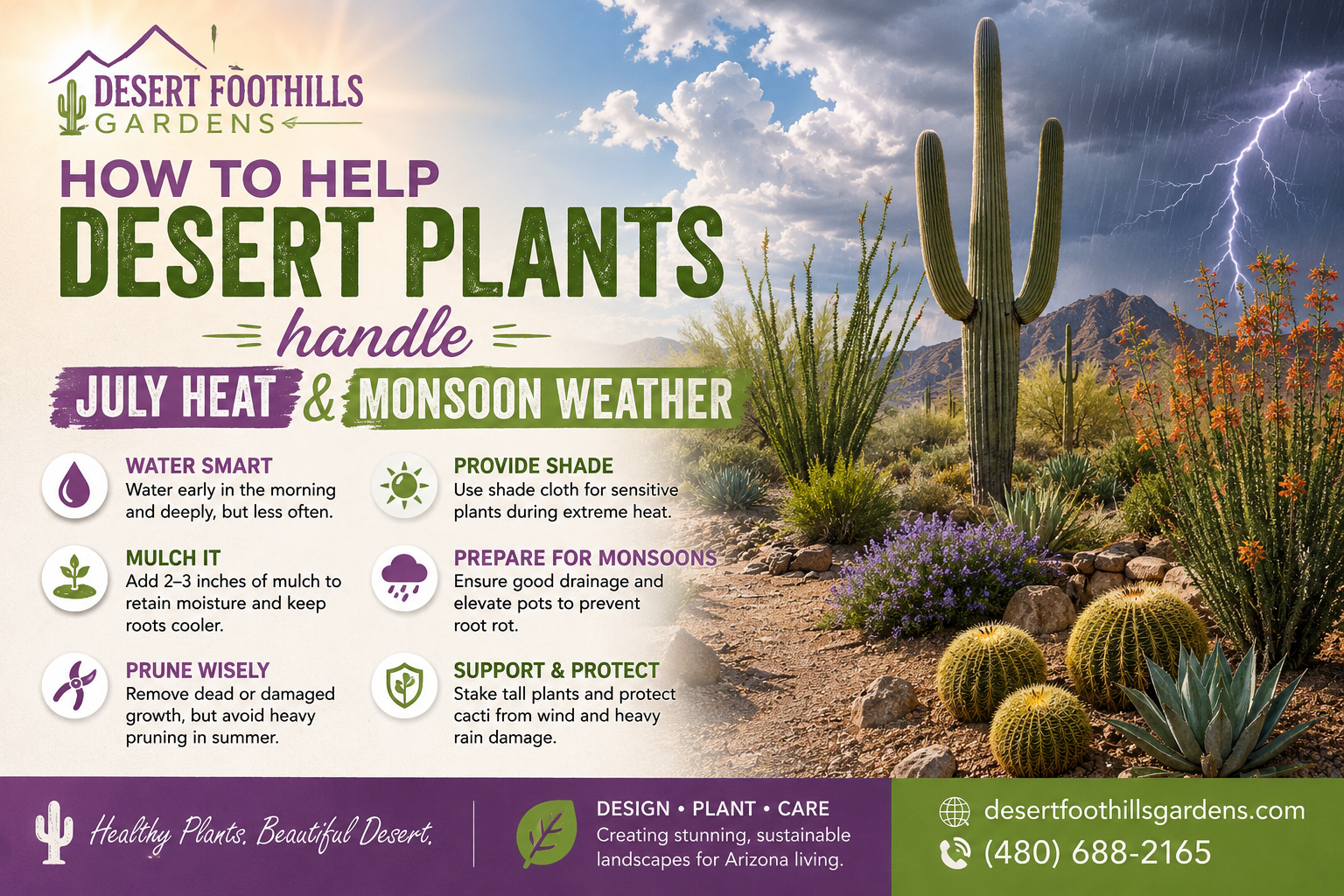
July in Arizona is a strange month for landscaping. One day the yard is baking in hard sun. The next day a monsoon storm can bring wind, dust, heavy rain, and debris. Even plants that belong in the desert can struggle if they are in the wrong place, watered the wrong way, or planted without enough thought.
That is why summer plant care is not just about adding more water. In many cases, it is about choosing the right plants, checking drainage, protecting roots, and letting the landscape work with the desert instead of fighting it.
Desert Foothills Gardens Nursery in Cave Creek offers native plants, drought tolerant plants, cactus, desert trees, pottery, fountains, sculptures, and landscape design help for Arizona homes and businesses.
Choose Plants That Belong In The Desert
The best summer landscape starts with plant selection. A plant that looks good in a photo may not be happy in Cave Creek, Phoenix, Scottsdale, Carefree, or Anthem once July heat arrives.
Native and drought tolerant plants are usually better suited for the Valley because they are built for sun, dry air, and lower water use. Desert Foothills Gardens carries many desert plants for sale, including cactus, succulents, desert trees, shrubs, and hot weather flowers.
The AMWUA Landscape Plants for the Arizona Desert guide is also a useful reminder that low water plants can still provide color, shade, texture, and seasonal interest when they are chosen carefully.
Do Not Overreact After A Hot Week
When plants look tired in July, many homeowners immediately add more water. Sometimes that helps. Sometimes it causes more problems.
Too much water can damage roots, especially if soil does not drain well. Cactus and succulents can suffer when water sits around the root zone. Trees and shrubs may also struggle if irrigation runs too often but does not reach deeply enough.
A better approach is to check the soil, look at the plant, and think about where the water is actually going. Desert landscaping does not mean no water. It means smart water.
Watch Drainage During Monsoon Storms
Monsoon rain can expose weak spots in a landscape. Water may rush toward the house, collect around plants, wash away gravel, or leave some areas soaked while others stay dry.
Before storms become frequent, walk the yard and look for low spots, erosion, blocked drains, and areas where water has nowhere to go. A good desert landscape should guide water through the property without drowning plants or damaging hardscape.
Boulders, gravel, proper grading, plant placement, and irrigation planning can all make a difference.
Add Shade, Texture And Garden Features
A desert yard does not have to look bare. Cactus, desert trees, pottery, fountains, sculptures, benches, and garden accents can give the space more personality while still keeping it practical for Arizona.
Desert Foothills Gardens helps customers balance color, form, plants, sculptures, and water features for small gardens and larger estate landscapes.
Visit Desert Foothills Gardens Nursery
Desert Foothills Gardens Nursery has served Arizona since 1985 with desert plants, cactus, trees, pottery, water fountains, garden decor, and landscape design help.
Visit Desert Foothills Gardens at 33840 N. Cave Creek Rd. in Cave Creek, Arizona, or call 480 488 9455 to schedule a visit to your home.
Summer Desert Landscaping in Phoenix
Desert Foothills Gardens Nursery, Inc. has been Phoenix’s source for design, plan selection, and maintenance since 1985. We have a team of experts that help with the overall plan for your desert landscape that includes plant selection, design, irrigation, and water management strategies. If you are interested in seeing how Desert Foothills Gardens Nursery, Inc. could provide a low maintenance and low water use landscape at your home or business either stop our nursery at 33840 N. Cave Creek Rd. in Cave Creek or give us a call at 480-488-9455.


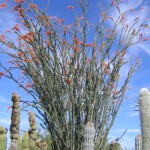 Ocotillo (Fouquieria splendens) are one of simplest plants to identify in the Sonoran desert. They are a larger shrub with elongated cane like un-branched spiky stems that grow from its short trunk. Small 2 inch leaves grow from its stems when there is enough moisture around. Thick clusters of red tube-like flowers grow from the end of its stems from March through June.
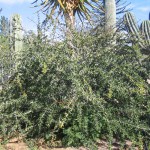 Boojum trees are a large stem succulent plant that can grow up to 54 feet high with a gently narrowing trunk, very much like that of a tall candle, up to 1-1/2 feet wide at its base. The trunk has a number of pencil-like branches with temporal leaves. On older boojum trees, its main trunk divides into two or more stems near the top of the tree which looks like the arms of an octopus. The creamy yellowish tube like flowers, bloom from July to August.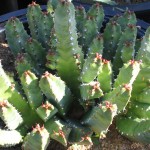
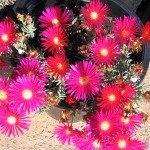 These low-growing succulents are all identified as ice plants. Delosperma species, most of which come from South Africa, are the best ice plants for the South (they do especially well in the Sonoran desert). They usually don’t grow more than a few inches high but spread to form low growing mats ideal for covering an embankment or slope. Small daisy-like flowers, ranging purples and pinks to yellows (about 2 inches across) appear above its small, succulent leaves, which may be flat or cylindrical.
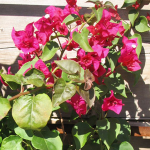 The Bougainvillea comes in many different variations. Bougainvillea loves the heat and sun and is a remarkably drought tolerant plant once rooted and stable. They bloom throughout the spring and fall seasons. While exceedingly hardy in the Sonoran desert heat, the bougainvillea can be marred by a strong frost and should be properly covered from the cold. With a plethora of colors, sizes and shapes make it a very popular landscaping plant.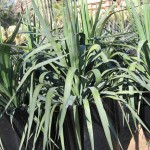
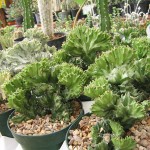 A coral cactus (euphorbia lactea crest) is clearly not a real cactus. It is actually a euphorbia plant that has a rare deviation, which causes it to grow with a crest-type appearance. Because this fascinating mutation is rare, the coral cactus is a very sought-after plant. This interesting plant closely looks like an ocean coral. It is extremely tough and needs almost no maintenance to survive. Its green and pinkish color makes it a popular choice in many landscapes, even though it can also be used to improve the appeal of the atmosphere indoors. It is a smaller plant that doesn’t grow more than 25 inches in height.